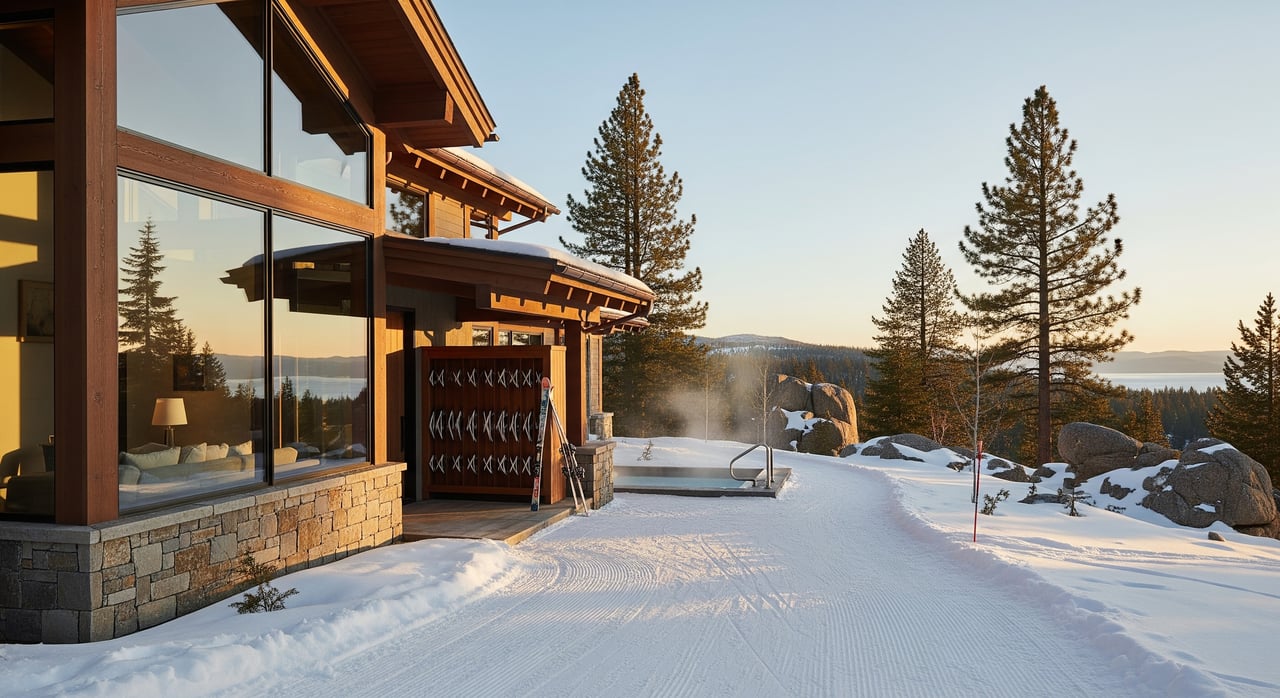
If you are shopping for a winter home near Palisades Tahoe, the phrase “ski-in/ski-out” can be the difference between clicking Buy Now and moving on. The challenge is that the term is used loosely, and in Olympic Valley, access changes with micro-location and winter operations. You want clarity, not surprises on closing day. In this guide, you will learn what ski-in/ski-out really means here, how the resort layout affects it, and a simple way to verify any listing before you tour. Let’s dive in.
What ski-in/ski-out means here
True ski-in/ski-out (door to lift or run)
- You can clip in at your door and glide onto a maintained ski run or marked ski traverse that leads to a lift, without using a car or shuttle and without crossing a plowed public road.
- The path is legal and allowed for skier use, is safe to travel, and is normally open during lift operations.
Ski-out and ski-to-door variants
- You might ski downhill to your building or garage, but remove skis for a short walk, stairs, or a plowed driveway.
- Ski-to-car means you can ski to your vehicle at the home, then still drive or be dropped at another base area.
Ski-accessible (commonly marketed)
- This covers properties that require a brief walk, shuttle, or short drive to reach lifts or runs. Think a 2 to 10 minute walk to the village base, or unclipping to cross a pedestrian plaza.
- Many listings say “ski-in/ski-out” when the accurate description is “ski-accessible.”
Why Olympic Valley is unique
Olympic Valley sits in a steep alpine bowl in unincorporated Placer County on Lake Tahoe’s north shore. The village and base areas are concentrated on the valley floor. That terrain means access depends on exactly where a building sits relative to groomed runs, marked traverses, plazas, and plowed roads.
- Properties next to village plazas or base gates are the most likely to be truly door-to-lift.
- Some runs flow to the village, while others end at mid-mountain or separate base lots. If a run does not pass your building, you will not glide out without a walk or shuttle.
- Marked ski traverses and designated downhill paths matter. These create legal, maintained corridors from buildings to lifts.
- Aerial tram or gondola bases can improve convenience, but many “gondola-adjacent” units still require a short walk or stairs.
- Garages and plowed driveways break true ski flow. If you must cross a plowed public road, most buyers would not consider that ski-in/ski-out.
- Slope-side buildings may have better direct access to upper terrain, but approaches can be steeper and subject to operational closures.
Common misunderstandings to avoid
- Marketing language often equates “close to lifts” with ski-in/ski-out. Insist on the exact door-to-lift route.
- A building’s lobby might connect to a pathway that is plowed in winter or restricted by the HOA. That is not the same as a maintained ski traverse.
- Crossing a public road, even a short one, typically fails a strict ski-in/ski-out test and can raise safety and liability concerns.
- Access can change with snowpack, avalanche control, tree work, or mountain operations. A route that skis well in a deep winter might not function in a low-snow year.
- Vertical drop is more useful than distance. A short glide to a lift beats a flat traverse that requires skating or hiking.
- Storage and circulation matter. Boot rooms, ski lockers, elevators, and stairways affect daily ease, yet they are often overlooked.
How to verify a listing in winter
Use this simple, repeatable process for any Olympic Valley property.
Step A: Map and visual checks
- Compare the current resort trail map to satellite imagery to see if a run or marked traverse actually fronts the building or HOA open space.
- Confirm whether the connection is a maintained ski route or a plowed public road.
Step B: On-the-ground confirmation
- Ask the listing agent and the HOA to describe the exact route from the unit door to the nearest lift. Note any portion across a plowed road, private yard, or restricted common area.
- Request photos or a short video of the door-to-lift route in winter conditions, plus a statement on how it works in low-snow winters.
- Verify the presence and location of ski lockers, boot rooms, and designated ski entries.
Step C: Resort operations
- Contact Palisades Tahoe mountain operations to ask whether a specific traverse or run is designated for skier access to buildings and if it closes for control work or maintenance.
- Confirm lift schedules and whether any referenced lift or tram is seasonal or subject to planned downtime.
Step D: Legal, safety, and logistics
- Check Placer County parcel maps and recorded easements that might affect skier right-of-way.
- Review HOA bylaws for rules on egress, pathways, and landscaping that could block ski routes.
- Confirm parking, guest parking, and unloading zones, and whether you must carry gear across plowed areas.
Shortlisting strategy for Tahoe buyers
- Priority picks: Homes or condos that border a designated run or marked traverse, have a ground-level winter path that stays unplowed, offer on-site ski storage, and avoid any public road crossing.
- Secondary picks: Units with a short, direct walk to a lift or gondola base on a groomed or well-lit path with no stairs.
- Tertiary picks: Properties that rely on a reliable shuttle. These can suit buyers who value convenience and value over pure door-to-lift access.
Questions to ask before you offer
- From the unit door to the nearest lift, what is the exact route, and does any part cross a plowed road or private yard?
- Is there a designated ski traverse, and who maintains it, the resort or the HOA?
- When is that route closed, and who decides on closures?
- Are ski lockers, a boot room, or on-site ski storage provided? How far are they from the lifts?
- Do you need to carry skis or boots across stairs, ramps, or through elevators?
- Are there easements or HOA rules that limit ski traffic across common areas?
- Are there winter photos or video of the route in both typical and low-snow seasons?
Real-world expectations in Placer County winters
Winter operations evolve. Palisades Tahoe may change traverse routes, close areas for avalanche control, or adjust grooming. In deep winters, side paths can feel effortless. In lean years, a door-to-lift route might require a short walk or may not be available.
Night operations are limited and seasonal. In the off-season, many winter paths are closed. If summer use matters to you, plan for a different access pattern outside of winter.
Work with a team that knows the details
Ski-area homes bring design choices, easements, and seasonal access questions that deserve careful attention. You want guidance that balances lifestyle goals with clear-eyed verification. The Cutler Team blends architectural insight with seasoned transaction management so you can act confidently in a market where micro-location determines daily experience.
If you want a tailored shortlist and on-the-ground verification for Olympic Valley and nearby Tahoe City, reach out to Carina Cutler for a conversation about your ski-day priorities.
FAQs
What does ski-in/ski-out mean in Olympic Valley?
- It means you can clip in at your door and glide onto a maintained run or marked traverse to a lift without shuttles or crossing plowed public roads, and that route is allowed and typically open during lift hours.
Can I trust “ski-in/ski-out” claims near Palisades Tahoe?
- Do not take it at face value, ask for the exact door-to-lift route, winter photos or video, and HOA confirmation of allowed skier egress and path maintenance.
Is “ski-accessible” good enough for most Tahoe buyers?
- It depends on you, many buyers are happy with a short, reliable walk or shuttle, while purists want true door-to-lift access and will pay a premium for it.
Are single-family homes or condos more likely to be true ski-in/ski-out?
- Both can qualify, but condos adjacent to the village base often deliver better door-to-lift access, while many homes offer ski-to-door or ski-to-car with a short walk.
How do HOA rules affect ski access in Olympic Valley?
- HOAs can allow or restrict crossing common areas, maintain or not maintain winter paths, and determine where ski storage is located, all of which influence daily convenience.