Lake access in Carnelian Bay sounds simple until you start comparing what you actually get. In this stretch of North Lake Tahoe, access is limited, regulated, and often tied to private memberships or HOA structures rather than just proximity to the water. If you are wondering whether Carnelian Bay HOA fees are really worth paying for lake access, the short answer is: it depends on how you plan to use the lake. Let’s dive in.
Why lake access is different in Carnelian Bay
In Carnelian Bay, lake access is not just about owning near the shoreline. It usually falls into three categories: private club or association access, public access, and regulated moorings. That distinction matters because the value of an HOA or membership often comes from access rights and logistics, not just a lake-adjacent address.
Lake moorings are also tightly regulated. TRPA requires registration for existing moorings, runs an annual lottery for new moorings, generally limits single-family parcels to two moorings, and currently charges $43 per year per mooring plus a $47 annual buoy scenic mitigation fee. In other words, access has real scarcity and real carrying costs behind it.
It also helps to think of private access as a managed shoreline entitlement, not an unrestricted waterfront right. The shoreline remains part of a broader public-trust framework, so buyers are paying for structured access within a regulated system. That makes HOA fees easier to evaluate when you look at the actual convenience and privileges they provide.
Public access is the baseline comparison
Before you assume private access is the only good option, it is worth looking at what public access already offers in Carnelian Bay. The California Tahoe Conservancy says the Carnelian Bay Lake Access East project includes public pathways, benches, picnic tables, barbecues, restrooms, a car-top boat launch, day-use mooring buoys, a pier, and a beachfront trail.
That means the decision is not simply private access versus no access. The real question is whether you want the extra convenience, predictability, and boating support that can come with an HOA or club. For some buyers, public access covers most of what they need.
When an HOA fee is usually worth it
An HOA or membership fee tends to feel worth it when it gives you something that is hard to recreate on your own. In Carnelian Bay, that often means a private pier, buoy access or a buoy-lottery path, shared lakefront, easier loading and unloading, and managed common areas.
If you are a frequent boater, those benefits can be significant. Saving time, reducing launch-day hassle, and having a more predictable shoreline setup can justify annual dues that might otherwise seem high. For buyers who use the lake often, convenience has real value.
The value case is weaker if your main goal is simply being close to Tahoe. If you mostly want views, beach days, and occasional time by the water, public access may be enough. In that case, HOA dues may feel like a premium for amenities you do not use often.
The tradeoff: more access, more rules
The other side of managed lake access is community oversight. Many Carnelian Bay associations and clubs have detailed rules around parking, pets, rental activity, quiet hours, snow operations, amenity use, and seasonal boating procedures.
That is not necessarily a bad thing. For some buyers, those rules help protect common areas and make the experience more orderly. But if you want a casual cabin lifestyle with fewer restrictions, a rules-based community may feel like too much structure.
Cedar Flat: strongest true HOA access model
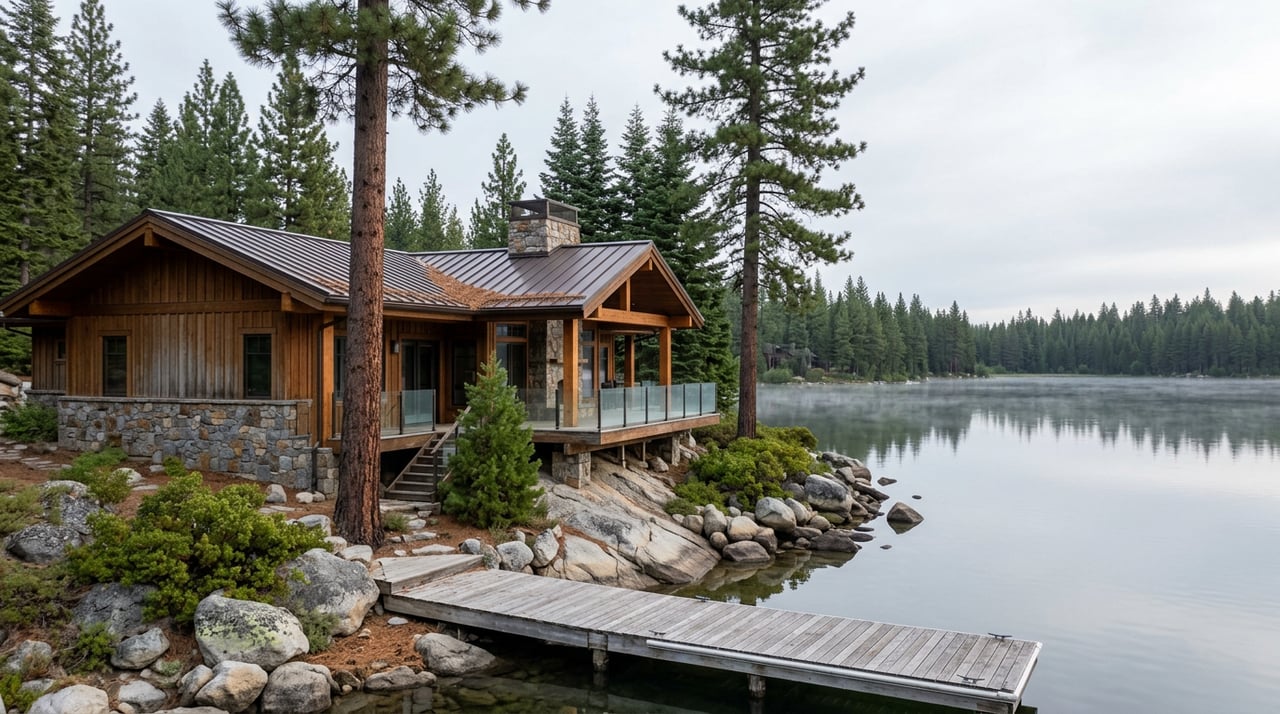
Cedar Flat is one of the clearest examples of an HOA-style lake-access community in Carnelian Bay. The association says it includes 133 homes and offers a shared lakefront and pier, with homeowners able to participate in a mooring-field program.
Current HOA dues are $590 per quarter, or about $2,360 per year. Owners who want to enter the annual buoy lottery must submit an application and initiation fee by December 15, and the lottery is held in February. For buyers who care about boating access, that process is a central part of the value proposition.
Cedar Flat also makes the rule structure very clear. Its public rules include dog restrictions from 10 a.m. to 4 p.m. except when boarding a vessel, quiet hours from 9 p.m. to 8 a.m., and a requirement that personal watercraft be removed from lakefront racks by mid-October. The HOA also maintains private roads and easements and does not allow street parking or parking on dirt areas adjacent to streets.
For some buyers, that level of management is a benefit. You get defined systems, maintained shared assets, and a more structured shoreline experience. For others, especially buyers who do not need a pier or buoy access, the annual cost and rule burden may outweigh the benefit.
Cedar Flat may be worth it if:
- You want shared lakefront and pier access
- You boat regularly and care about buoy-related access
- You value a managed community with defined rules
- You are comfortable with HOA oversight and rental compliance requirements
Agate Bay: club access with scarcity built in
Agate Bay works differently from a traditional HOA lakefront setup. It centers around the Agate Pier and Swim Club, which offers amenities such as a seasonal heated pool, hot tub, volleyball, BBQ area, tennis courts, private pier, private beach, sun deck, and a buoy access program.
What makes Agate Bay especially interesting is scarcity. Public materials indicate the club serves about 10 neighborhoods and roughly 580 properties, but fewer than 200 pier memberships are available. That helps explain why access can carry meaningful resale value.
Recent listing examples describe annual dues in roughly the $550 to $700 range, transfer fees from about $1,000 to about $2,500, and some listings describe full membership as having a value in the $50,000 to $65,000 range. Those numbers should always be verified during escrow, but they show how meaningful transferable access can be in this market.
TRPA records also show the club itself absorbs recurring buoy-related costs. The Agate Pier and Swim Club parcel tracker shows 2025 and 2026 invoices of $1,890 for 21 buoys. That is helpful context because it shows there are real regulatory expenses behind the scenes before a member even pays dues.
Agate Bay may be worth it if:
- You can secure a transferable membership
- You want private pier and beach access
- You will use the club amenities regularly
- You understand that membership availability is limited
Ridgewood: access can depend on availability
Ridgewood is another shoreline association in Carnelian Bay, but buyers should approach it as a limited-access, availability-dependent option. A California State Lands Commission lease from 2009 authorized continued use of an existing pier, 15 mooring buoys, and one swim float, with the buoy field to be allocated fairly among association members.
More recent public listing pages still describe Ridgewood parcels as able to join when memberships become available. That is the key takeaway. If you are considering Ridgewood for lake access, you will want to confirm whether access is automatic, optional, transferable, or waitlisted.
Carnelian Woods: better for amenities than boating
Carnelian Woods is best understood as an amenity-rich HOA rather than a direct boat-access community. Its public FAQ lists 2024 HOA dues of $2,716, billed quarterly, and amenities include tennis and pickleball courts, pool, spas, barbecues, gathering space, game room, sauna, lake access, bike racks, playground, and kayak racks.
The HOA also notes that boat and trailer parking is available at the end of Silver Pine Drive with a permit, and that owner insurance must be HO-6 because the HOA policy covers only the shell of the unit. That makes Carnelian Woods a useful comparison for buyers who want Tahoe lifestyle amenities without prioritizing a private pier or buoy field.
If your goal is broad recreation and lower-maintenance ownership, Carnelian Woods may make sense. If your focus is boating logistics and shoreline entitlement, it is generally a less direct fit than Cedar Flat or Agate Bay.
How to decide if the dues pencil out
The best way to judge whether a Carnelian Bay HOA is worth it is to match the fee to your actual use. A buyer who plans to boat often, wants simpler shoreline logistics, and values managed common areas may see strong value in annual dues. A buyer who mainly wants scenery, occasional lake days, and flexibility may prefer public access and fewer obligations.
Ask yourself a few practical questions:
- Do you need a pier, buoy access, or boat-related convenience?
- Is access automatic, or does it depend on a membership, lottery, or waitlist?
- Are memberships transferable?
- What are the current dues, transfer fees, and any special assessments?
- Do the community rules fit how you plan to use the property?
- If you plan to rent the property, what compliance steps are required?
In Carnelian Bay, details matter more than labels. Two homes in the same ZIP code can offer very different lake-use experiences depending on whether access is deeded, optional, capped, or governed by a club structure.
The bottom line on Carnelian Bay HOAs
For frequent boaters, Carnelian Bay HOA fees are often worth it because they buy something difficult to replace: private shoreline convenience in a highly regulated market. Cedar Flat and Agate Bay stand out as the strongest options for buyers who care most about pier and buoy-related access, while Ridgewood requires close attention to availability and Carnelian Woods is a better fit for broader amenities than boat-specific use.
For buyers who mainly want Tahoe beauty and occasional public lake use, the answer is often no. You may be happier without the added dues and rules. The right choice comes down to how often you will use the access, how much convenience matters to you, and whether the community structure supports your goals.
If you are weighing HOA access against public access, it helps to look beyond the dues line and study the actual entitlement, restrictions, and transferability. That is where the real value lives. If you want help comparing Carnelian Bay communities and reading the fine print before you buy, Carina Cutler can help you evaluate the details with a local, practical eye.
FAQs
Are Carnelian Bay HOAs worth it for boat owners?
- Often yes. If you boat regularly, private pier access, buoy programs, and easier shoreline logistics can make annual dues feel worthwhile.
Does every Carnelian Bay HOA include private lake access?
- No. Some communities offer stronger boating and shoreline access than others. Cedar Flat and Agate Bay are more boat-access focused, while Carnelian Woods is more amenity-focused.
Is public lake access available in Carnelian Bay?
- Yes. The Carnelian Bay Lake Access East area includes public pathways, picnic areas, restrooms, a car-top boat launch, day-use mooring buoys, a pier, and a beachfront trail.
What should you verify before buying in a Carnelian Bay lake-access community?
- Confirm whether access is automatic or optional, whether a membership is transferable, whether there is a cap or waitlist, what the current dues and fees are, and whether the rules match your intended use.
How much are Cedar Flat HOA dues?
- Cedar Flat lists current dues at $590 per quarter, or about $2,360 per year.
How much are Carnelian Woods HOA dues?
- Carnelian Woods lists 2024 HOA dues of $2,716, invoiced quarterly.
Are Agate Bay memberships always included with a home purchase?
- Not necessarily. Public information suggests membership availability is limited, and transfer terms and costs should be verified carefully during escrow.