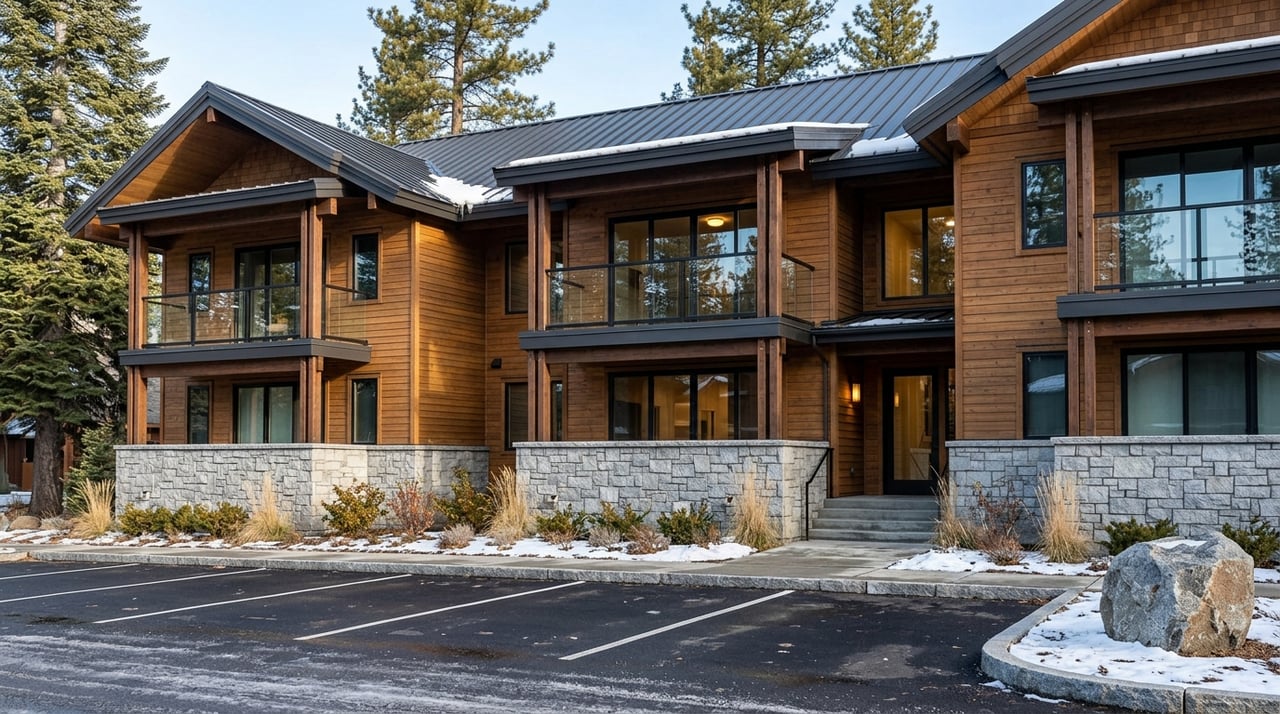
You can be steps from the water in Kings Beach and still face a very different day-to-day experience depending on what you buy. A condo and a cottage may both put you near Lake Tahoe, but they often differ in maintenance, parking, outdoor space, and rental flexibility. If you are trying to decide which setup fits your lifestyle, this guide will help you compare the tradeoffs with more confidence. Let’s dive in.
Kings Beach living near the water
Kings Beach offers easy access to the shoreline, with Kings Beach State Recreation Area as a major day-use destination for swimming, boating, and picnicking. That proximity is part of the appeal for both condo buyers and cottage buyers. But being near the water also means paying attention to practical issues like parking and access.
Parking is actively managed in this part of North Lake Tahoe. Kings Beach State Recreation Area charges parking fees year-round and does not allow overnight parking or camping. Placer County also runs parking controls in the Kings Beach Commercial Core from May 1 through September 30, with paid parking in several local lots.
That matters because a home near the beach is not just about distance to the lake. It is also about what happens when you come home with guests, beach gear, or more than one car. In Kings Beach, parking rights at a specific property can have a big impact on how easy ownership feels.
Condo ownership in Kings Beach
A condo in California is usually part of a common-interest development. That means you own your unit and also hold an undivided interest in common areas, while the homeowners association manages shared property and enforces the community’s rules. Those rules are typically spelled out in the CC&Rs, which run with the land.
For many buyers, the main advantage is simplicity. A condo often offers more of a lock-and-leave lifestyle, with the HOA handling common-area maintenance and some association-level insurance responsibilities. If you want a place near the water without taking on every exterior task yourself, that can be a meaningful benefit.
The tradeoff is less autonomy. HOA fees, assessments, rules, reserve funding decisions, and enforcement actions all become part of ownership. Before you fall in love with a unit, it is important to understand not just the monthly dues, but also how the association operates.
What to review in a condo community
If you are considering a condo near the water in Kings Beach, take time to review:
- CC&Rs and association rules
- Monthly HOA assessments
- Reserve funding and repair plans
- Recent budgets
- Meeting minutes
- Any special assessments or user fees
- Parking rights for owners and guests
- Whether patios, balconies, or parking areas are exclusive-use or shared
These details can shape your ownership experience just as much as the floor plan or lake proximity.
Cottage ownership near the lake
A freestanding cottage often appeals to buyers who want more direct control. In many cases, you will have greater responsibility for the lot, yard, deck, exterior, and private outdoor use. That can be a major plus if you value privacy, gear storage, or the freedom to manage your space more independently.
A cottage near the water can also feel more personal and flexible in daily use. You may have more room for paddleboards, bikes, skis, or seasonal gear, along with a stronger sense of separation from neighbors. For many Tahoe buyers, that extra breathing room is a big part of the draw.
The tradeoff is that more control usually means more work. Exterior upkeep, landscaping, seasonal cleanup, and repairs are more likely to fall directly on you. In a mountain setting, that can be an important part of the ownership equation.
Comparing the day-to-day tradeoffs
If you are deciding between a condo and a cottage in Kings Beach, the best fit usually comes down to how you want to live, not just what looks best on paper. Both can offer access to the same beach lifestyle, but they support that lifestyle in different ways.
Here is a simple comparison of the most common tradeoffs:
| Factor | Condo Near the Water | Cottage Near the Water |
|---|---|---|
| Maintenance | Often lower exterior maintenance due to HOA | More owner-managed upkeep |
| Rules and oversight | HOA rules and enforcement apply | Often more direct control, though some homes may still have CC&Rs |
| Outdoor space | May include patios or balconies, depending on documents | Often more direct control of yard, deck, and exterior areas |
| Parking | Must verify deeded or assigned parking rights | Often more private parking control, depending on property |
| Privacy | Typically more shared surroundings | Typically more separation and privacy |
| Lock-and-leave ease | Usually stronger | Usually less hands-off |
This is where local knowledge really matters. In Kings Beach, small differences in parking, shared areas, and access can create very different ownership experiences.
Costs to verify before you buy
The sticker price is only part of the story. A smart comparison between a condo and a cottage should include the recurring and occasional costs that come with each property type.
For a condo, your focus should be on HOA-related costs. That can include monthly assessments, reserve contributions, special assessments, fines, and amenity or user fees. HOA budgets should also reflect expenses, reserves, and repair or replacement planning for common facilities.
For a cottage, recurring costs often shift toward direct owner expenses. That can include exterior repairs, maintenance, landscaping, and seasonal cleanup. In this area, property tax bills are based on assessed value plus voter-approved debt and direct charges, and supplemental taxes may apply after a change in ownership or new construction.
Cost questions worth asking
Before you move forward on either property type, ask:
- What are the total monthly and annual ownership costs?
- Are there any pending special assessments?
- How are reserves funded?
- What exterior items would you be responsible for?
- What are the parking rights and limits?
- Are there additional fees tied to amenities or rentals?
Clear answers here can help you avoid surprises later.
Parking matters more than you think
Near the water in Kings Beach, parking is not a small detail. It can influence your everyday convenience, your guests’ experience, and the practicality of occasional rentals.
Placer County’s parking management program includes the Kings Beach Commercial Core, and local lots may be paid during the summer season. Kings Beach State Recreation Area also requires paid parking year-round and does not allow overnight parking. Because of that, on-site parking and clearly defined parking rights deserve close attention.
If you are comparing two otherwise similar properties, the one with better parking certainty may offer more real-world value. This is especially true if you plan to host friends, spend long weekends at the lake, or rent the property from time to time.
Renting the property occasionally
If occasional renting is part of your plan, you will want to look beyond location and square footage. In Placer County, short-term rentals are defined as rentals of 30 days or fewer, and the local rules can affect condos and cottages in different ways.
An owner who wants to rent a property on a short-term basis generally needs a TOT certificate, a valid short-term rental permit, a local contact reachable 24 hours a day within 35 driving miles, current fire inspections, and bear-box or dumpster documentation. New or renewing permits can also be suspended if inspections are not current.
For cost planning, Placer County lists a nonrefundable short-term rental application fee of $326.02. In the North Tahoe Fire District, the interior fire life-safety inspection fee for short-term rental applicants is $507.02. Those numbers can help you compare a condo and a cottage more realistically if rental use is part of your strategy.
Condo rental questions to ask
If you are looking at a condo, review the HOA documents carefully before assuming rentals are allowed or easy to manage. Since CC&Rs run with the land and vary by project, one community may be far more restrictive than another.
Ask questions like:
- Are short-term rentals allowed by the HOA?
- Are there caps, waiting periods, or minimum stay rules?
- Are guest parking rules strict?
- Are there separate rental fees or registration steps?
- Does the property qualify as a condo-hotel?
Some approved condo-hotels do not require individual short-term rental permits for each unit, but that only applies when the property meets specific county requirements for management, staffing, and rule enforcement.
Which option fits your lifestyle?
If you want lower-maintenance ownership and you are comfortable with HOA oversight, a condo near the water may be the better fit. It can be especially appealing if you value simplicity and want an easier lock-and-leave setup for weekends, seasonal use, or a second home.
If you want more privacy, more outdoor control, and potentially better storage and parking flexibility, a freestanding cottage may suit you better. That path often works best if you are comfortable taking on more upkeep and paying close attention to local compliance if rentals are part of the plan.
In Kings Beach, the choice is rarely just condo versus cottage in the abstract. It is about the exact property, the documents behind it, and how the details support the way you want to use the home.
If you are weighing a condo or cottage near the water in Kings Beach, Carina Cutler can help you look beyond the photos and evaluate the real ownership picture, from HOA structure and parking to rental rules and long-term fit.
FAQs
What is the main difference between a condo and cottage in Kings Beach?
- A condo usually offers lower exterior maintenance with HOA oversight, while a cottage usually offers more privacy and direct control but more owner responsibility.
Why is parking important for waterfront property in Kings Beach?
- Parking matters because Kings Beach has seasonal paid parking controls in the commercial core, and Kings Beach State Recreation Area requires paid parking year-round with no overnight parking.
What condo documents should you review before buying in Kings Beach?
- You should review the CC&Rs, rules, budget, reserve information, meeting minutes, assessments, and any documents that clarify parking and exclusive-use areas.
Can you use a Kings Beach condo or cottage as a short-term rental?
- Possibly, but in Placer County short-term rentals of 30 days or fewer generally require local approvals and compliance items, and condos may also face HOA restrictions.
What short-term rental fees should buyers know in Placer County?
- Placer County lists a nonrefundable STR application fee of $326.02, and the North Tahoe Fire District interior fire life-safety inspection fee is $507.02 for STR applicants in that district.
Is a cottage always more flexible than a condo in Kings Beach?
- Not always, because some detached homes may also be part of developments with CC&Rs or shared maintenance obligations, so each property needs to be reviewed individually.